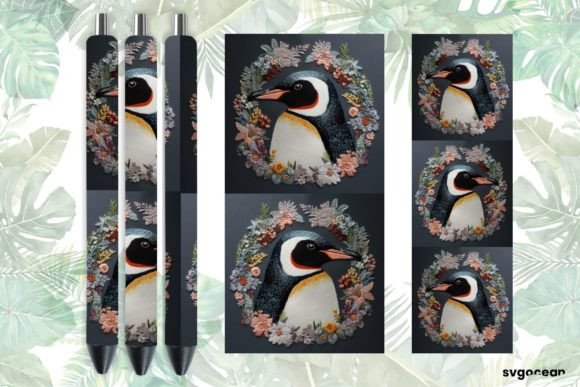
Reviewing Embroidery Penguin Pen Wraps Sublimation
As an embroidery designer who has spent countless weekends behind a craft fair table, I have learned that not every digital file translates into a bestseller. When I first opened the Embroidery Penguin Pen Wraps Sublimation package, my immediate goal was to determine if this asset belonged in my premium holiday collection or if it was better suited for quick, low-cost giveaways. The product description indicates this is a graphics-based item, specifically providing high-resolution PNG files rather than traditional stitch files. This distinction is crucial for anyone looking to create a craft fair product that stands out in a crowded market.
First Impressions and Visual Appeal
The title suggests a whimsical, winter-themed aesthetic. In the world of Crafts, penguins are perennial favorites because they bridge the gap between cute and festive without being overly religious or specific to one holiday. Upon reviewing the included assets—a PNG file at 450 x 1425 px and another at 750 x 1500 px, both at 300 DPI—I noticed the vertical orientation. This aspect ratio is ideal for long, narrow items. For an embroidery business owner, this means the design is perfectly scaled for pen wraps, bookmarks, or tall patches. The high resolution ensures that when you use these design assets for sublimation printing or as references for digitizing, the edges remain crisp, avoiding the pixelation that can make a handmade product look amateurish.
Strategic Product Applications
While the title mentions pen wraps, my experience tells me to think broader. A tote bag design often requires a larger focal point, but this vertical penguin graphic could serve as a charming side-panel accent on a canvas tote. It would pair beautifully with a bold, sans-serif font added during the digitizing process. For apron embroidery, placing this design near the pocket or along the strap adds a playful touch that appeals to buyers looking for unique kitchen gifts. However, the most natural fit remains small goods. Imagine a set of embroidered pencil cases or fabric pen holders sold as a bundle. These are high-margin, low-shipping-cost items that perform exceptionally well for an Etsy seller or at a local boutique.
Consider using this graphic for tea towel embroidery. By positioning the penguin near the bottom hem, you create a balanced look that doesn’t interfere with the towel’s functionality. If you are creating an embroidered patch, the vertical shape allows for a clean die-cut edge, making it easy to iron onto jackets, hats, or backpacks. This versatility makes it a strong candidate for a small shop product line where you want to maximize the utility of a single purchase.
Production Practicality and Batch Selling
One of the biggest challenges at a craft fair is production speed. Since this product provides PNG Graphics rather than a pre-digitized machine embroidery design, you have two paths. First, you can use sublimation printing on polyester-blend fabrics for instant, colorful results. Second, you can digitize the image yourself or hire a digitizer to convert it into an embroidery file. If you choose the latter, pay close attention to stitch density. Penguins often involve large areas of black or dark blue thread. Without proper underlay and density adjustments, these areas can become stiff and pucker the fabric.
For batch production, consistency is key. If you are making fifty pen wraps for a holiday market, ensure your hoop size is optimized to minimize re-hooping time. A 4x4 or 5x7 hoop is typically sufficient for this scale. Using the right stabilizer is non-negotiable here; a cut-away stabilizer will provide the necessary support for the dense stitching required to fill in the penguin’s body, ensuring the finished product holds its shape after repeated use.
Navigating Technical Challenges
There are careful-use notes to consider before committing to full production. The provided PNG files are high quality, but if you are using them as a reference for manual digitizing, be wary of tiny details. Small beaks or feet may get lost if the stitch length is too long. Additionally, thread colors play a massive role in visual appeal. Black thread on dark navy fabric will vanish. Always test your design on scrap fabric that matches your final product material. Check the contrast between the penguin and the background. If you are working with textured towels, the intricate details might snag or look muddy, so a simpler, bolder version of the design might be necessary for those surfaces.
Another consideration is the fabric texture. Smooth cotton or linen showcases crisp embroidery best. Curved surfaces, like caps, require careful placement to avoid distortion. If you plan to sell these as commercial embroidery items, ensure that the final look is professional. A printable mockup can help you visualize the design on different products before you stitch a single thread, saving you time and materials.
Boosting Brand Consistency and Sales
How does Embroidery Penguin Pen Wraps Sublimation affect your brand? It adds a layer of whimsy and approachability. Customers at a craft fair are drawn to items that evoke emotion. A cute penguin triggers a positive response, increasing buyer engagement. When displayed alongside other winter-themed items, it strengthens your booth display strength by creating a cohesive narrative. For online listings, use the high-resolution PNGs to create attractive thumbnails. Clear, bright images stop the scroll and drive clicks.
Before selling, always confirm commercial licensing. The description mentions a ZIP file with PNGs, but it does not explicitly state the license terms for reselling finished physical goods versus digital redistribution. As a responsible creative entrepreneur, you must verify whether you can sell the stitched items or if the license is restricted to personal use. Never assume. Check the seller’s terms carefully to protect your business.
Final Designer Notes
To summarize, this design asset offers significant potential for holiday-themed small goods. My advice is to start small. Digitize the design, test it on a few fabric types, and evaluate the stitch density and thread tension. Create at least one real mockup to photograph for your portfolio. Compare how it looks on light versus dark fabrics to determine your best-selling colorways. If the digitizing is clean and the concept resonates with your target audience, this penguin design can become a staple in your winter collection. Remember, the difference between a good design and a great product lies in the execution. Take the time to refine your technique, and let the charm of the penguin do the rest of the selling.